Show Notes
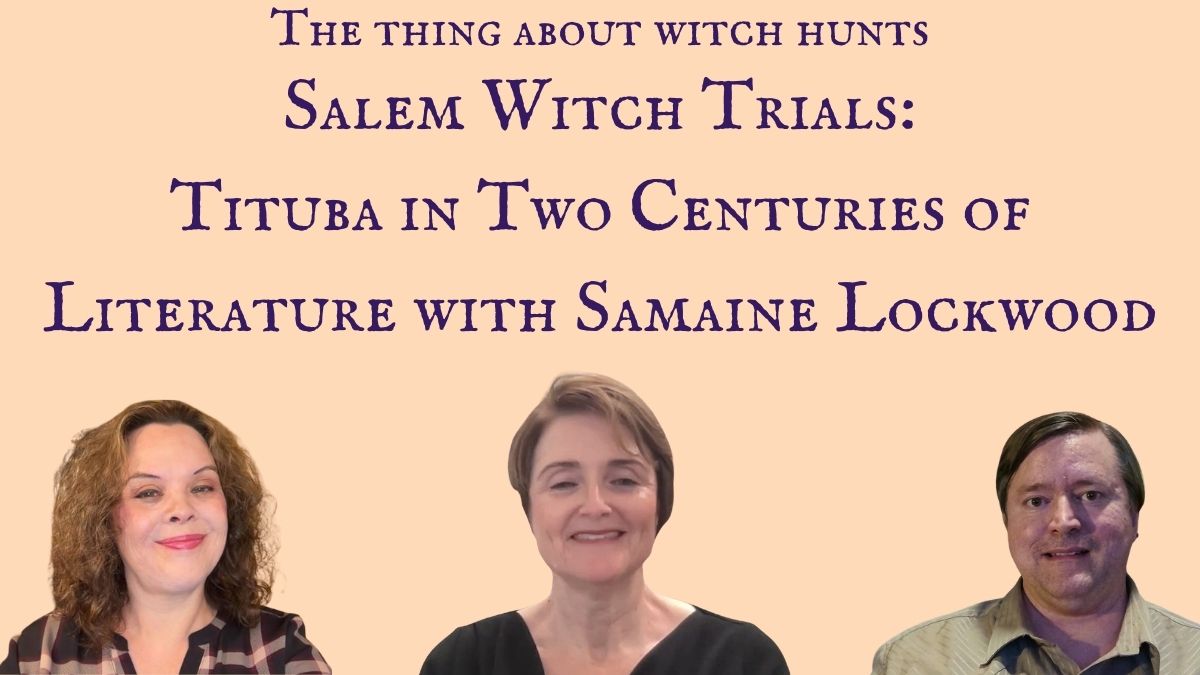
What does American literature reveal about how a society imagines justice, belonging, and the power of women? Samaine Lockwood, Associate Professor of English at George Mason University and the 2026 Fenwick Fellow, has spent years tracing that question through one of the most enduring stories in American culture: the Salem witch trials. Her fellowship project, Tituba Indian: The History of an American Cultural Figure follows Tituba Indian from the historical record of 1692 through two centuries of novels, plays, and reimaginings to ask what her story has been made to carry and why.
In This Episode
- How the Salem witch trials became one of the most reimagined episodes in American literary history
- Why Tituba Indian sits at the center of debates about race, gender, and civic belonging across two centuries of American culture
- How culture reuses the past
- How Ann Petry’s Tituba of Salem Village broke from literary tradition decades before most readers noticed
- Why Arthur Miller’s The Crucible remains complicated and how teachers are beginning to challenge it in the classroom
- The real significance of the witch as a figure in literature, from colonial revival to contemporary young adult fiction
- Where to find the vast archive of Salem witch trial literature that predates copyright, freely available online
About Samaine Lockwood Samaine Lockwood is an Associate Professor of English at George Mason University, specializing in 19th century American literature and gender and sexuality studies. She is the 2026 Fenwick Fellow, a research fellowship funded by the George Mason Fenwick Library supporting her book in progress, Tituba Indian and the History of an American Cultural Figure. Her previous book, Archives of Desire: the Queer Historical Work of New England Regionalism, was published by the University of North Carolina Press in 2015.
Authors and Works Mentioned in This Episode
- Ann Petry: Tituba of Salem Village; The Narrows; Biography of Harriet Tubman. First black woman to write a bestselling novel in the United States.
- Maryse Conde: I, Tituba: Black Witch of Salem
- Henry William Herbert: The Fair Puritan (written 1850s, published 1870s)
- Elizabeth Gaskell: Lois the Witch
- Charlotte Perkins Gilman (with Grace Ellery Channing): Untitled Salem play, 1890, held at the Schlesinger Library, Harvard
- Pauline Elizabeth Hopkins: Fiction writer, first Black woman editor of a magazine, key figure in the Boston African American community at the turn of the 20th century
- Arthur Miller: The Crucible
- Marian Starkey: The Devil in Massachusetts
- Matilda Joslyn Gage: Woman, Church, and State (1890s)
- Saidiya Hartman: Venus in Two Acts
- Gretchen Adams: The Specter of Salem
- Henry James: The Turn of the Screw and Other Ghost Stories
- Kimberly Bellflower: John Proctor is the Villain (Broadway, 2024)
- Samaine Lockwood: Archives of Desire: the Queer Historical Work of New England Regionalism
- Keith Clark: The Radical Fiction of Ann Petry
Where to Find These Works Most works published before 1923 are in the public domain and freely available through Open Library and Internet Archive. For titles still in print, support this podcast and End Witch Hunts by purchasing through our Bookshop.org storefront: bookshop.org/shop/endwitchhunts
Every purchase (of any title) through Bookshop.org supports independent bookstores and helps fund the work of End Witch Hunts when you purchase through our affiliate link.
Links
- Publications by Samaine Lockwood
- University Libraries has named Samaine Lockwood, associate professor of English, the 2026 Fenwick Fellow
- Buy Books Mentioned in Today’s Episode
- Sign the Petition to Exonerate the Boston 8
- The History of Witch Trial Exonerations in Massachusetts
- About the MA Witch Hunt Justice Project
- Purchase a MA Witch Hunt Justice Project Memorial PIn