Most people know a fragment of the Salem witch trials. A handful of accusers, a Puritan town, a few months of chaos, and then it was over. It gets taught as an American story, a cautionary tale about mob mentality or the dangers of superstition. And then it ends.
That fragment is not the full story. And the piece passed around without context is far more dangerous than the whole.
That is what The Thing About Witch Hunts is here to change.
It Did Not Start in Salem
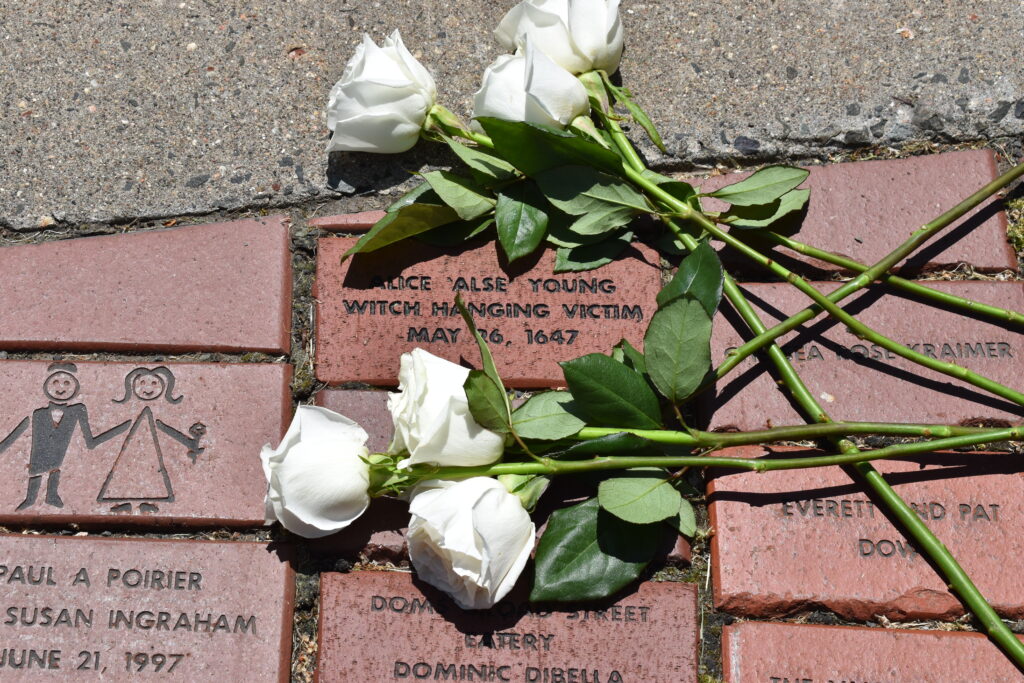
The first person executed for witchcraft in colonial America was Alse Young, from Windsor, Connecticut, hanged in Hartford in 1647, four decades before Salem ever reached its crisis point. Connecticut was prosecuting witchcraft through established courts, with warrants, examinations, and verdicts, long before Massachusetts followed. These were not accidents. They were not chaos. They were systems doing exactly what they were designed to do when fear was the operating logic.
Salem drew on centuries of European legal and theological tradition that had already killed tens of thousands of people before a single colonist set foot in the Americas. The fear of diabolical conspiracy, the legal framework that allowed spectral evidence, the community logic that said one person’s suffering must be another person’s fault: none of that originated in the colonies. Salem was a late chapter in a very long book.
The People Were Real
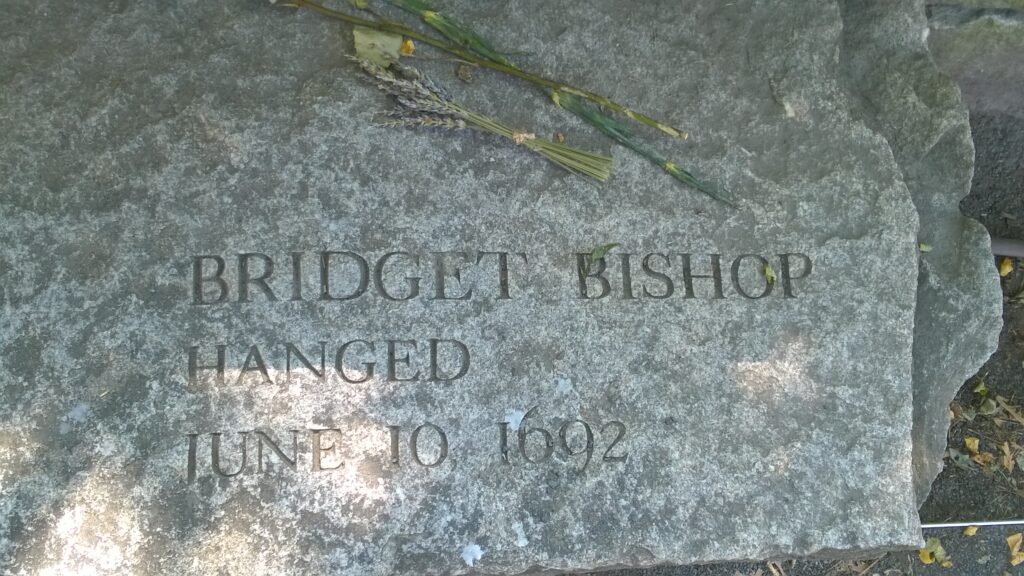
Bridget Bishop was the first person executed in Salem, hanged on June 10, 1692. Rebecca Nurse was 71 years old when she was arrested. She was a respected church member. Her neighbors signed a petition on her behalf. She was convicted anyway and hanged on July 19. George Jacobs Sr., an elderly man who walked with two canes, was executed on August 19. Mary Easty, Rebecca’s sister, followed on September 22. Before she died, Mary Easty wrote a petition asking not for her own life, but asking the court to stop. She was asking, in plain language, for the people who would come after her. Samuel Wardwell, a carpenter from Andover, had initially confessed under pressure and then recanted. He was hanged on September 22 alongside Mary Easty.
These were not symbols. They were people inside a legal process that had decided, using every tool available to it, that they were guilty.
The Mechanisms Do Not Change
Diabolical fear is a specific kind of fear. It is not the fear of a known danger. It is the fear that an invisible, malevolent force is working through people who cannot be identified, undermining everything a community depends on. It is fear that demands a name.
Zero-sum logic follows from that fear. If someone is suffering, someone caused it. There must be an agent. Once responsibility is assigned, removing that person restores the balance.
Death blaming is what happens when that logic reaches its conclusion. Someone dies, a child, a neighbor, a family member, and the death cannot simply be loss. It must be caused. A name is produced. The framework that produced the accusation is never questioned, because questioning it would mean living with the uncertainty it was built to eliminate.
This is not a 17th-century process. It is a current one.
The Same Story in 2026
People are being accused of witchcraft right now. Accusations are happening on every inhabited continent. In sub-Saharan Africa, South Asia, and the Pacific, they move through established community processes and end in isolation, violence, and death. In Latin America and the Caribbean, in the Middle East, in East and Central Asia, in indigenous communities across the Americas, the pattern repeats in different languages, different theologies, different legal frameworks. In the United States and Europe, accusations happen inside households, in religious communities, in exorcisms performed on children. No geography is exempt. No tradition is immune. The accused are frequently elderly women, children, and people who are already socially vulnerable. The accusations follow periods of stress: disease, economic hardship, the death of a child. The location changes. The pattern does not.
Rebecca Nurse and Mary Easty were accused within a community under extreme stress, by a legal system that took the accusations seriously, through a process that followed its own internal logic to a lethal conclusion. The people living their version of 1692 in 2026 are inside the same structure. The fear is the same fear. The logic is the same logic. The cost is the same cost.
This Is Where the Full Story Lives
There is a habit of treating the history of witchcraft prosecutions as a closed subject. Something that happened, something humanity has moved past, something that can be safely reduced to a lesson about superstition and set aside. That habit is not neutral. It makes the mechanism invisible.
The full story, told completely and honestly, is not a dangerous can of worms. It is the thing that makes the pattern visible. It connects the courtroom in Hartford to the courtroom in Salem to the village in Tanzania to the family in Papua New Guinea. It names the process, not as an anomaly, but as a recurring human behavior with identifiable features that can be recognized and interrupted.
That is what The Thing About Witch Hunts does, episode by episode. Historians, advocates, survivors, and researchers come together here to tell the whole thing: the history, the law, the theology, the fear, and the living consequences. Because the people at the center of these stories, then and now, deserve a full accounting. Not a fragment. Not a metaphor. The truth.
The full story is the respectful one. It says: these were real people, inside a real process, and that process is still running. The history is not history yet. And this is where we talk about it.
Subscribe to The Thing About Witch Hunts wherever you listen to podcasts. Hosted by Josh Hutchinson and Sarah Jack.
Leave a Reply